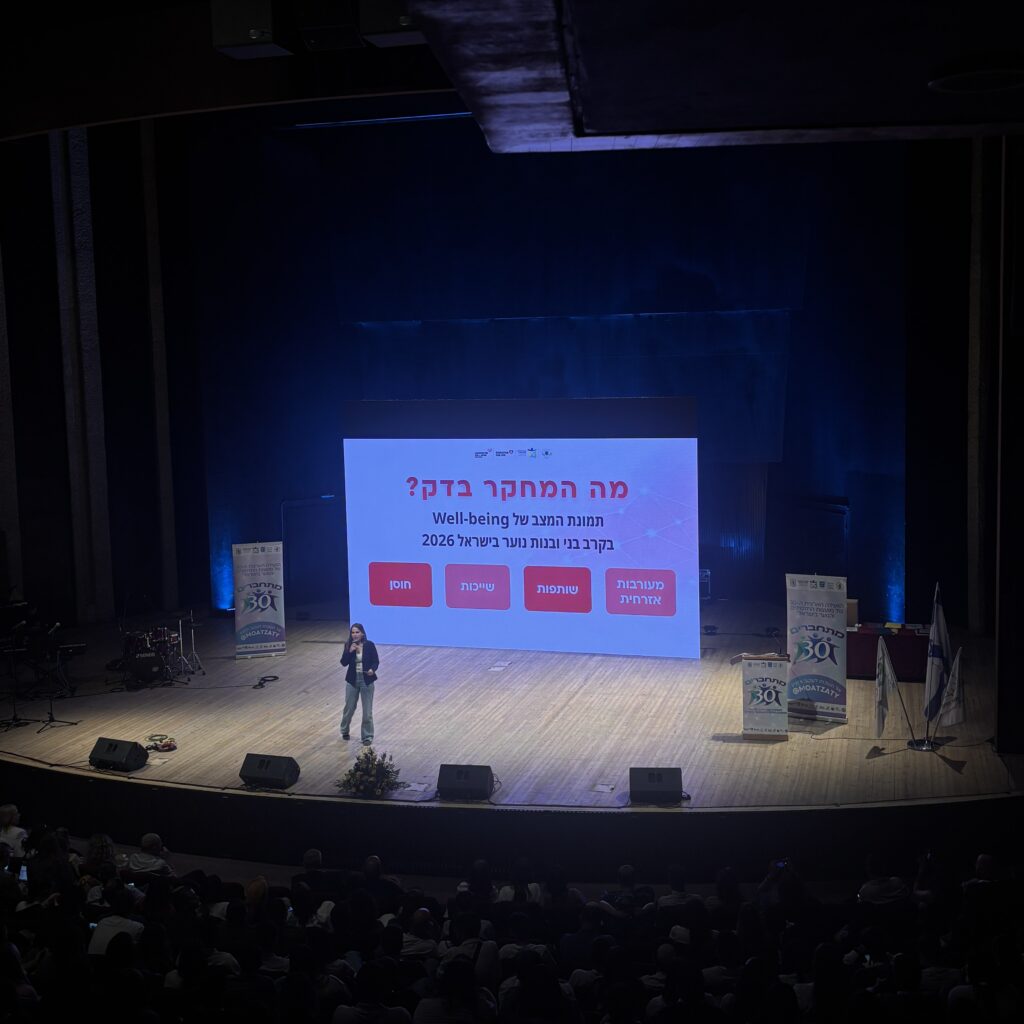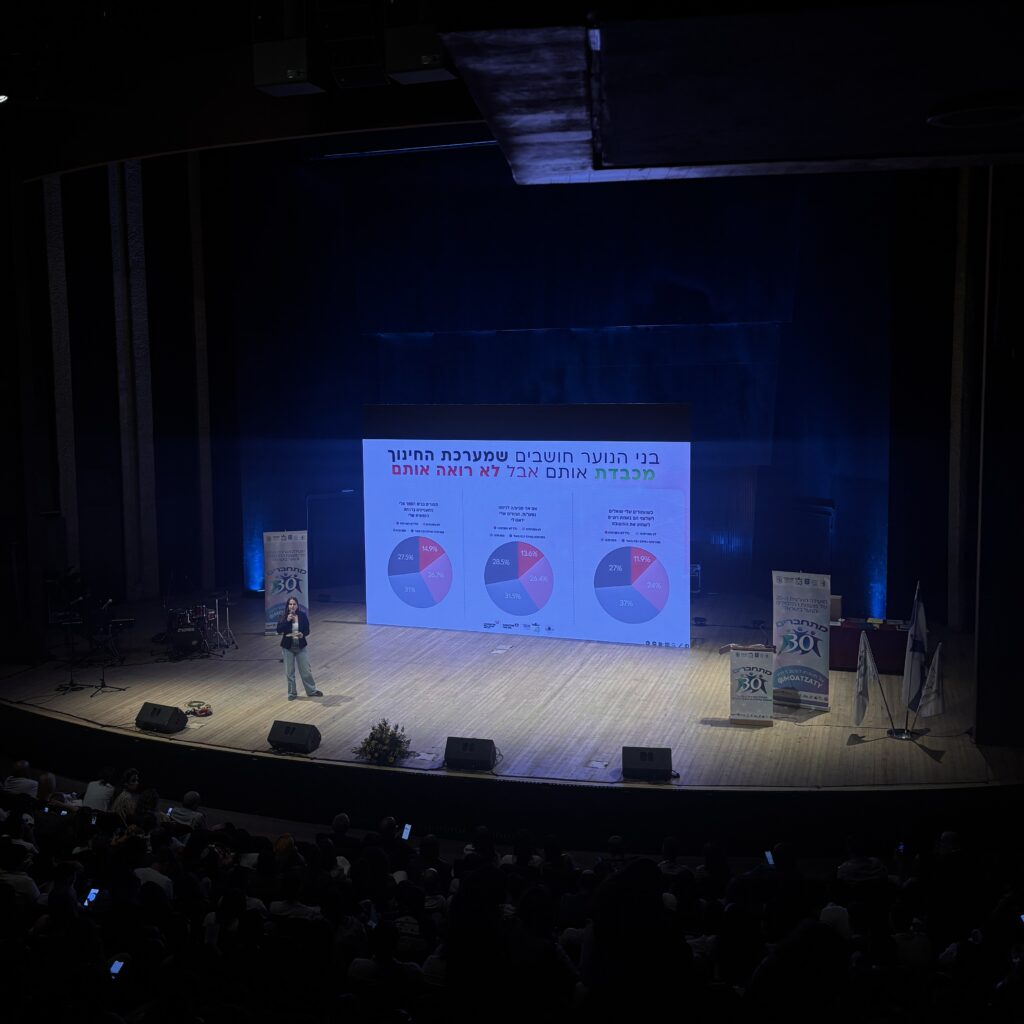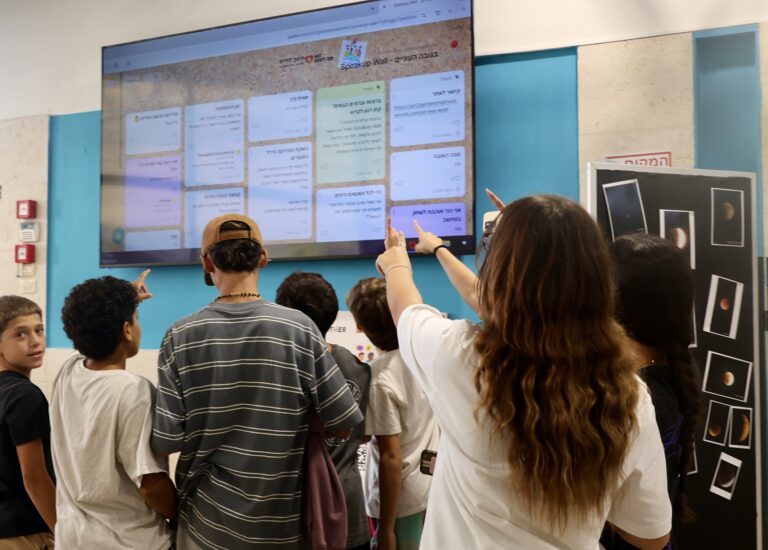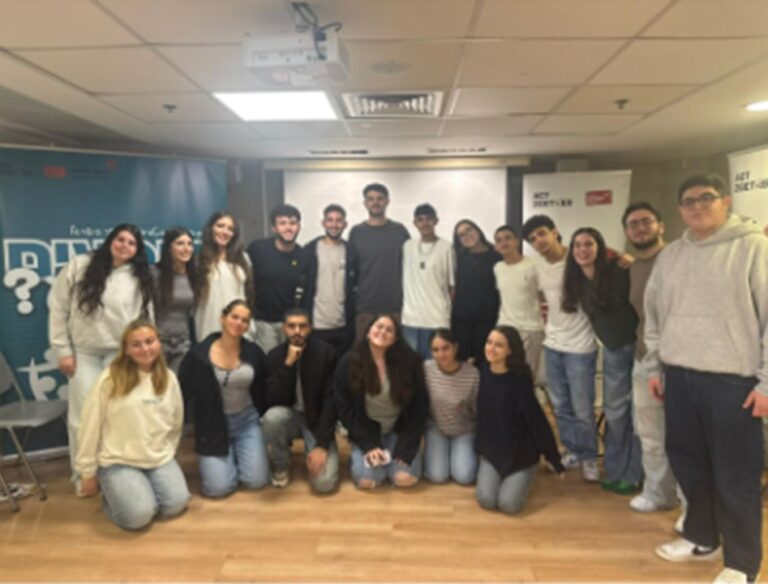
During the 30th National Conference of the Student and Youth Councils, held on Sunday in Jerusalem in the presence of the Minister of Education, the initial findings of the new national study “Seeing Youth 2026” were presented for the first time. The study examines the state of young people in Israel during the ongoing war.
The study, which included more than 2,100 teenagers from across Israel, presents a complex picture of Israel’s younger generation: alongside a strong sense of belonging, care for others, and a desire to be involved, there are also clear signs of emotional exhaustion, a crisis of trust in leadership, and a feeling of limited influence.
Among the key findings presented:
-
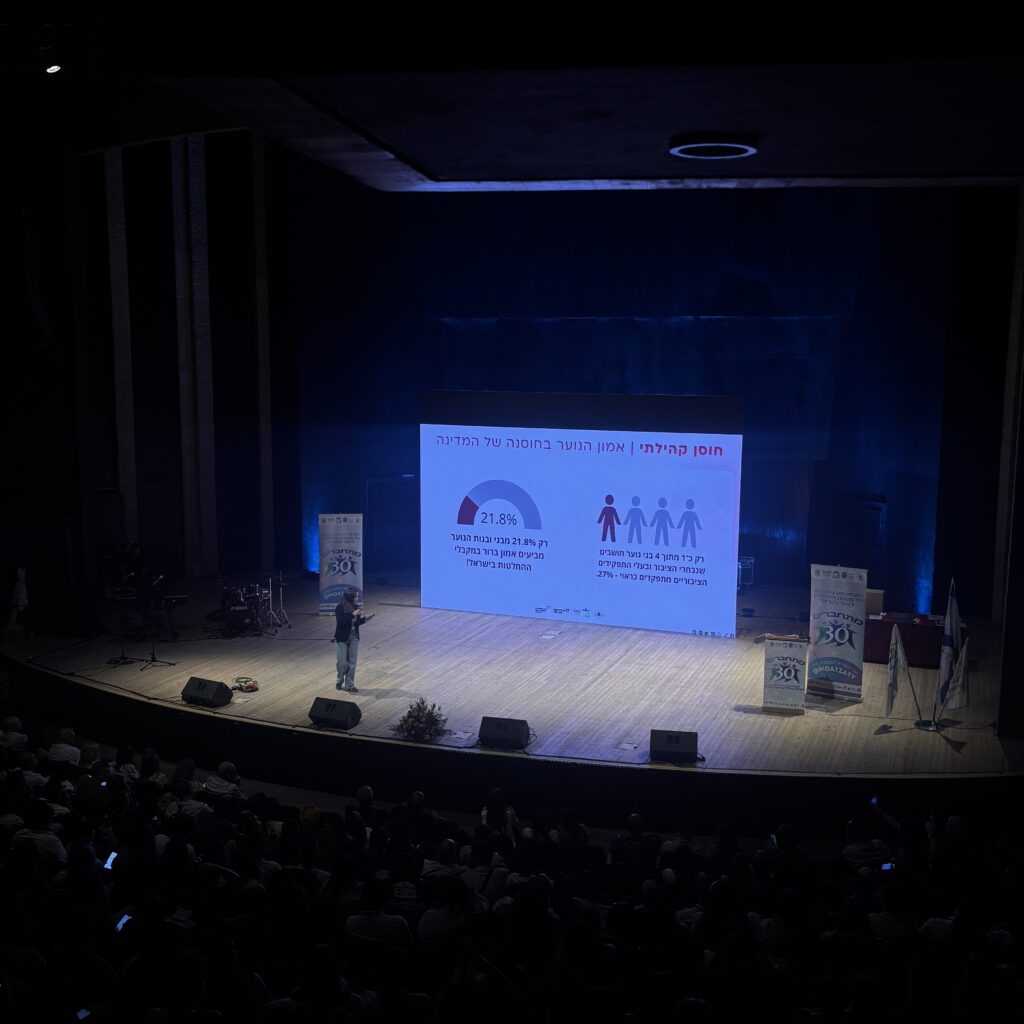
Only 21.8% of teenagers express clear trust in decision-makers in Israel.
-
Only around 1 in 4 teenagers believe elected officials are performing properly.
-
81.4% believe young people should be involved in decision-making processes, yet only 36.8% feel their opinion is genuinely asked for.
-
Only 16.1% believe relations between different groups in Israeli society are good.
-
Only about 54% report feeling full of energy and vitality during this period.
The study was initiated by the National Student and Youth Council, in partnership with Education for Life and Ono Academic College, with the support of the international research institute L4WB-I. One of the study’s unique characteristics is that teenagers themselves were partners not only in participating, but also in shaping the research, designing the questions, and raising the issues most relevant to their generation.
Dror Cohen, Chair of the National Student and Youth Council, said during the presentation:
“Teenagers in Israel are not asking others to speak on their behalf — they are asking to become genuine partners. When young people feel unseen and unheard, and believe they have no influence, it harms their ability to feel connected, secure, and meaningful.”
Or Mordo, CEO of Education for Life and a member of the research team, added:
“The study reveals a generation with tremendous strengths, but also with fatigue, emotional overload, and a deep crisis of trust. We cannot build the future through slogans alone — the future is built when young people feel they have a voice, when there is an adult who truly sees them, and when there is a community that enables them to make a real impact.”
The full study, which will include an in-depth analysis of well-being, personal and community resilience, belonging, civic engagement, and youth participation in decision-making, is expected to be published publicly in the coming month.