Rights Squared: A New Game Bringing Children’s Rights into Conversation
Ahead of World Children’s Day, Education for Life is launching “Rights Squared” — a card game inviting children, young people and adults to explore rights through play, challenges and conversations about everyday life.
Is it okay to share a friend’s photo without asking permission? How can we make sure everyone has a chance to express their views? And why is time for play and rest a right in itself? Questions about children’s rights arise at home, in classrooms, among friends and online. Sometimes, all we need is an opportunity to pause and talk about them together.
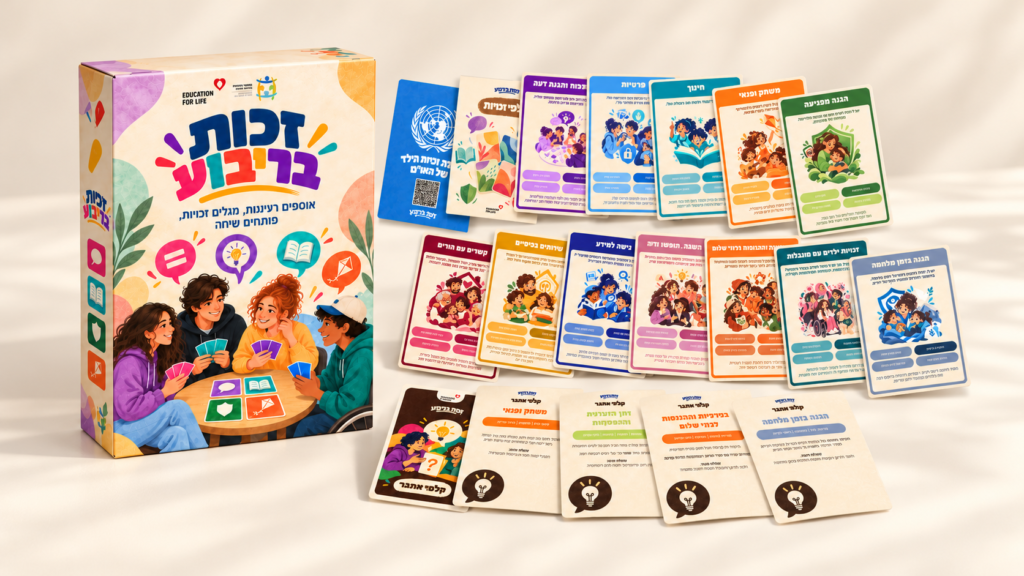
That is why we at Education for Life developed “Rights Squared” (זכות בריבוע): a Hebrew-language card game that combines learning about children’s rights with opportunities for connection and conversation.
Six Sets of Rights, Plenty of Room for Conversation
The game includes 24 rights cards, organised into six sets of four: participation; privacy; education; rest, play and culture; protection; and equality. Alongside them are six challenge cards that invite players to consider what these rights mean and connect them with familiar situations.
Each right concerns a different aspect of children’s and young people’s lives, and the rights are interconnected. The opportunity to express an opinion, for example, is connected to feeling safe and being treated equally. The right to privacy also concerns the respect we show one another. The game allows players to explore these rights and consider together how they are reflected in the relationships and environments in which we live.
Exploring Rights Through Our Own Experiences
Conversations about rights become meaningful when there is room for participants’ experiences and perspectives. What feels fair to them? When have they felt heard? Which situations leave them unsure about what to do?
“Rights Squared” offers a starting point for these conversations. Designed for classrooms, youth groups and families, it combines learning with shared play. Educators, youth workers and parents can use it to introduce a topic, invite questions and listen to what matters to the children and young people around them.
Adults taking part have an important role: making room for different answers, remaining curious and reflecting on their own habits and decisions. These conversations can lead to practical steps — from asking permission before sharing a photo to creating more opportunities for children to participate in decisions.
Connecting with Education for Life’s Approach
At Education for Life, our work is grounded in Learning for Well-being, an approach that recognises each child as a whole person with unique potential. Everyday experiences, relationships and the environments in which children grow are interconnected and shape their well-being and development.
The game reflects this approach by inviting children and adults to come together, explore different perspectives, learn from one another and consider how they can create more respectful and supportive environments.
Learning about rights is part of this process. It also requires a willingness to listen to children and young people and give their views a meaningful place in decisions affecting their lives. Playing together can begin a conversation that continues long after the game ends.
For World Children’s Day — and Throughout the Year
World Children’s Day, marked on 20 November, is an opportunity to make time for children’s rights in our educational and family settings. “Rights Squared” was created to help these conversations continue throughout the year as part of everyday life together.
We invite you to bring the game into your classroom, youth group or home — and discover the questions, experiences and ideas that emerge around the table.
For information about the game, purchasing options and additional activity resources, visit Education for Life’s Children’s Rights Day page.